As the world watched NASA's Artemis II mission complete a historic journey around the moon and back, one Ñý¼§Ö±²¥ State University professor had a unique vantage point — decades of firsthand experience at NASA's Glenn Research Center in Cleveland, Ohio.
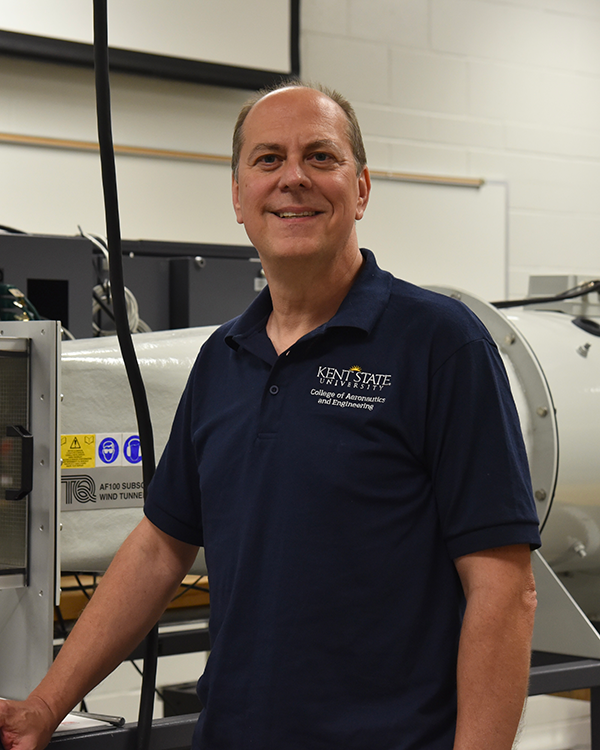
John Sankovic, Ph.D., interim director of the School of Engineering in Ñý¼§Ö±²¥ State's College of Aeronautics and Engineering, joined WAKR radio host Ray Horner to discuss the Artemis II mission and what it means for the future of human space exploration.
The conversation came at a landmark moment in space history. On April 10, the four-member Artemis II crew — NASA astronauts Reid Wiseman, Victor Glover and Christina Koch, and Canadian Space Agency astronaut Jeremy Hansen — splashed down safely in the Pacific Ocean, completing a nearly 10-day mission that made them the first humans to travel toward the moon in more than 50 years and set a new record for the farthest distance ever traveled from Earth.
The mission began April 1 with the liftoff of NASA's Space Launch System rocket from Kennedy Space Center and included a historic lunar flyby before the crew's successful return. NASA's associate administrator called it "a big step" toward a moon landing in the coming years.
For Sankovic, the mission carries personal resonance. Before joining Ñý¼§Ö±²¥ State, he spent 31 years at NASA, most recently serving as Glenn Research Center's chief technologist and director of the Office of Technology Incubation and Innovation — a tenure that earned him the NASA Outstanding Leadership Medal and six Agency Honor Group Achievement Awards. He also previously served as executive vice president of Parallax Advanced Research and president of the Ohio Aerospace Institute.
That expertise now benefits students in Ñý¼§Ö±²¥ State's College of Aeronautics and Engineering, which ranks as the No. 1 public engineering school in northern Ohio and 42nd nationally among nondoctoral engineering programs on the 2026 U.S. News and World Report Best Colleges ranking.
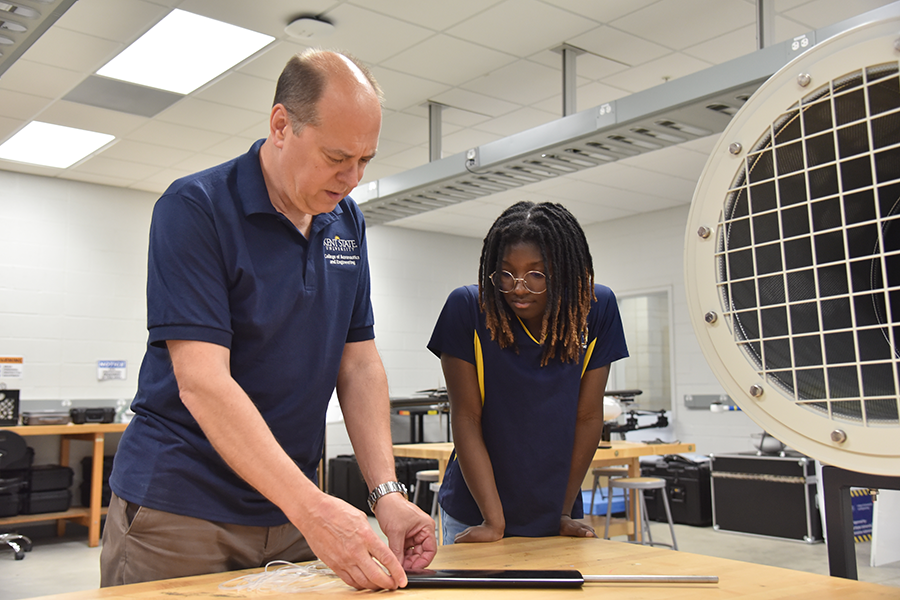
Top photo: John Sankovic (left) works with a student at Ñý¼§Ö±²¥ State's College of Aeronautics and Engineering.
