
Dr. Chi-hua Chiu Groff is an Associate Professor in the Department of Biological Sciences at 妖姬直播 State University and will be teaching two classes at the Florence Summer Institute this summer.
Teaching Biology Courses During the Florence Summer Institute
The 妖姬直播 State Florence Center hosts two sessions of the Florence Summer Institute. Students can choose to attend the June session, July session, or both. In the July 2026 session, Dr. Chi-hua Groff will be teaching Feasts and Plagues: The Science of Italian Food, Wine, and Disease as well as Mythological Creatures and Developmental Biology.
Feasts and Plagues: The Science of Italian Food, Wine, and Disease
Dr. Chi-hua Groff has been teaching at the Florence Summer Institute since 2015, when a few biology faculty were tasked with creating an engaging course for biology students. She has taught every summer since then. Her class, Feasts and Plagues: The Science of Italian Food, Wine, and Disease is a medical humanities class, but is open to all majors.
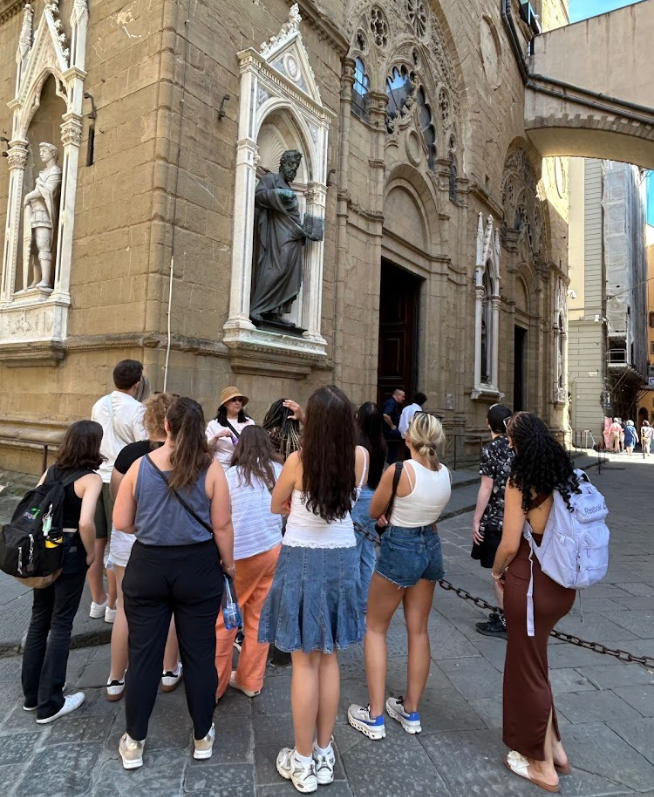
In Feasts and Plagues, students study microbial interactions with humans, learning about negative interactions that cause infectious disease like the Black Death and positive interactions in fermentation, an ancient and important process for making different foods and beverages. In addition to learning about these biology concepts, students visit sites and museums in Florence and Siena to get first-hand experience into how the Black Death impacted architecture and art, and also paved the way for the Renaissance.
Each year at the Florence Summer Institute, there is a field trip to Siena, Italy. During the field trip, Dr. Chi-hua Groff takes her students to look at an old church that was never completed due to the Black Death. Siena has the original walls around the city, dating back to the Middle Ages. Dr. Groff encourages students to pay attention to the walls and other details of the city and reflect and write about what it must have been like to be in Siena during the Black Death. In Florence, students visit the Uffizi Gallery to see how art changed from being two-dimensional and emotionless in the Middle Ages to achieving three-dimensional realism that was full of emotion in the Renaissance. In Florence, students also visit the Galileo Museum and La Specola to appreciate the birth of scientific thinking and modern medical practices.
Mythological Creatures and Developmental Biology
In Dr. Chi-hua Groff鈥檚 other class, Mythological Creatures and Developmental Biology, students focus on the major literary and cultural themes associated with mythological creatures and learn about our current understanding of embryonic development and the action of specific genes that pattern the adult body plan. She designed this course based on her love of mythological creatures and research background on body patterning mechanisms. This course is open to all majors.
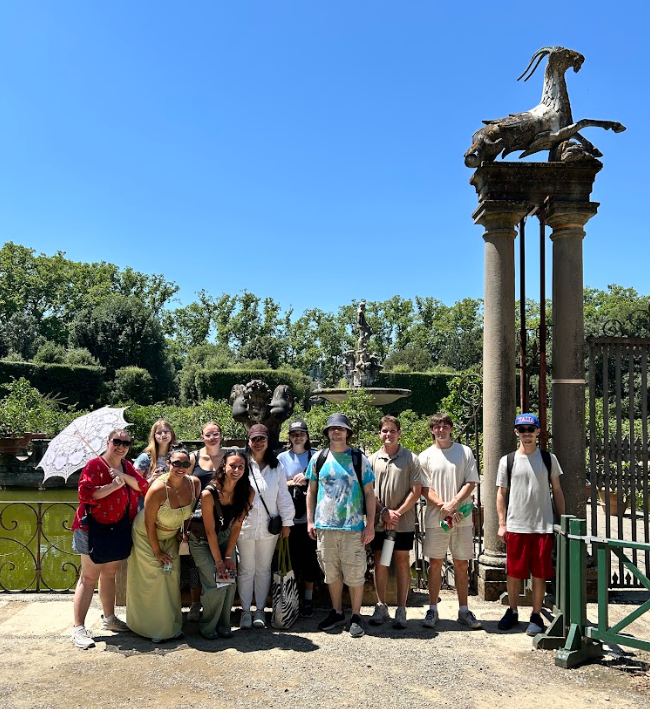
At the Uffizi Gallery in Florence, students visit seventeen paintings and sculptures of mythological figures, discuss the themes associated with these mythical creatures and their stories, and describe each specific body plan. Conversations in class focus on whether mythological creatures' body plans are possible or impossible, based upon what they have learned about vertebrate body patterning. Students also visit the Boboli Gardens to view and discuss a status of Pegasus and the National Archaeological Museum to view and discuss the Chimera of Florence.
Dr. Groff personally believes that adding this new component of mythology to learning about developmental biology can help students gain a more humanistic view on the subject. This is in line with the recent push for medical schools to bring in medical humanities, because of the lack of empathy in a lot of modern medicine. While Dr. Groff doesn't believe all students will make this connection, she hopes it gives students a new perspective on developmental biology.
Connecting with Students in Florence
Dr. Groff鈥檚 favorite part about teaching in Florence is interacting with students. She says it is easier to get to know her students personally when teaching a smaller class than she does on the main campus in Ohio.
She takes her students on walking tours around Florence and observes how these experiences impact their learning of biology in ways that couldn鈥檛 be achieved in a typical lecture hall. She also loves seeing students flourish in Florence, as it may be their first time out of the U.S. or Ohio. She believes the study abroad experience is valuable overall.
"The city of Florence is like an open-air museum and laboratory in which students can experience the intersection of biology and art. This provides them unique perspectives and insights into biological problems that they will forever carry within their hearts and minds".
Dr. Groff鈥檚 Florence Recommendations
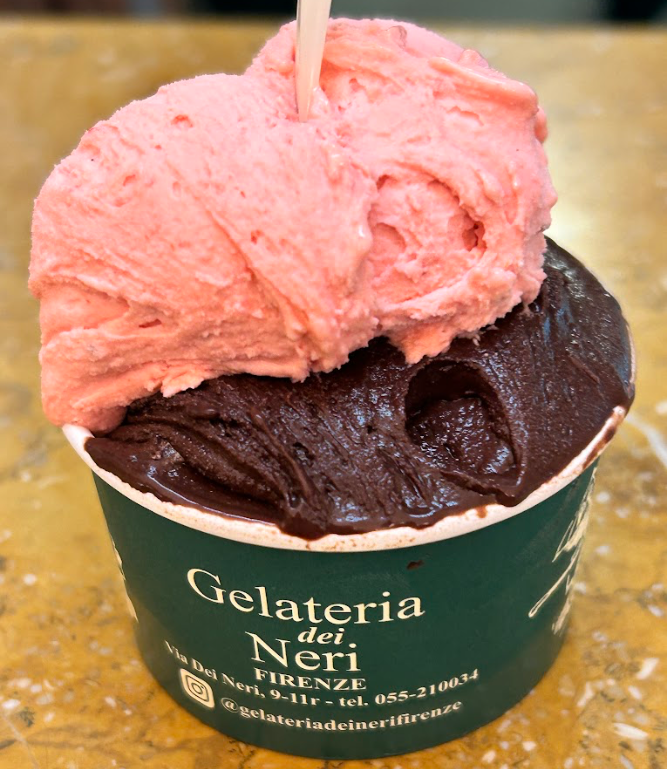
As for food, she recommends that everyone try gelato. After years of visiting Florence, and trying many different gelato places, she believes Gelateria Dei Neri is the best in Florence. She takes her classes there so students can try out their gelato. She also recommends pappardelle with boar sauce, a dish of long, wide, flat noodles, tossed in ragu made from slow-cooked boar, and pear stuffed ravioli.
When asked to recommend a specific 鈥渕ust-do鈥� thing in Florence, Dr. Chi-hua Groff has a hard time because there are so many things to do, and everyone has their preferences. She recommends doing research ahead of time, so you know what is available.
Because of fast trains in Europe, many major cities are nearby and accessible for students. She recommends students plan a few things to do outside of Florence, since travel is easy and inexpensive.
Her overall advice is for students to do research and figure out what to do when not taking classes. She says the four weeks go by quickly because of classes and field trips, and that it鈥檚 not hard to find things to do in Italy. She also says that Florence is a good introduction to studying abroad, since it is walkable and has all the modern conveniences of a city, but is also stunningly beautiful and filled with ancient culture, architecture, and art that is unmatched in the U.S.
Want to learn more about the Florence Summer Institute? Visit the Office of Global Education website.