
When Josh Kogan, a 2018 graduate of Ñý¼§Ö±²¥ State University, began his senior honors thesis, he intended to research a history that was deeply personal to him: the story of Jewish life in Mexico, where he was born and raised.
The project would grow into a comprehensive, community-supported historical volume that would be published in Mexico City.
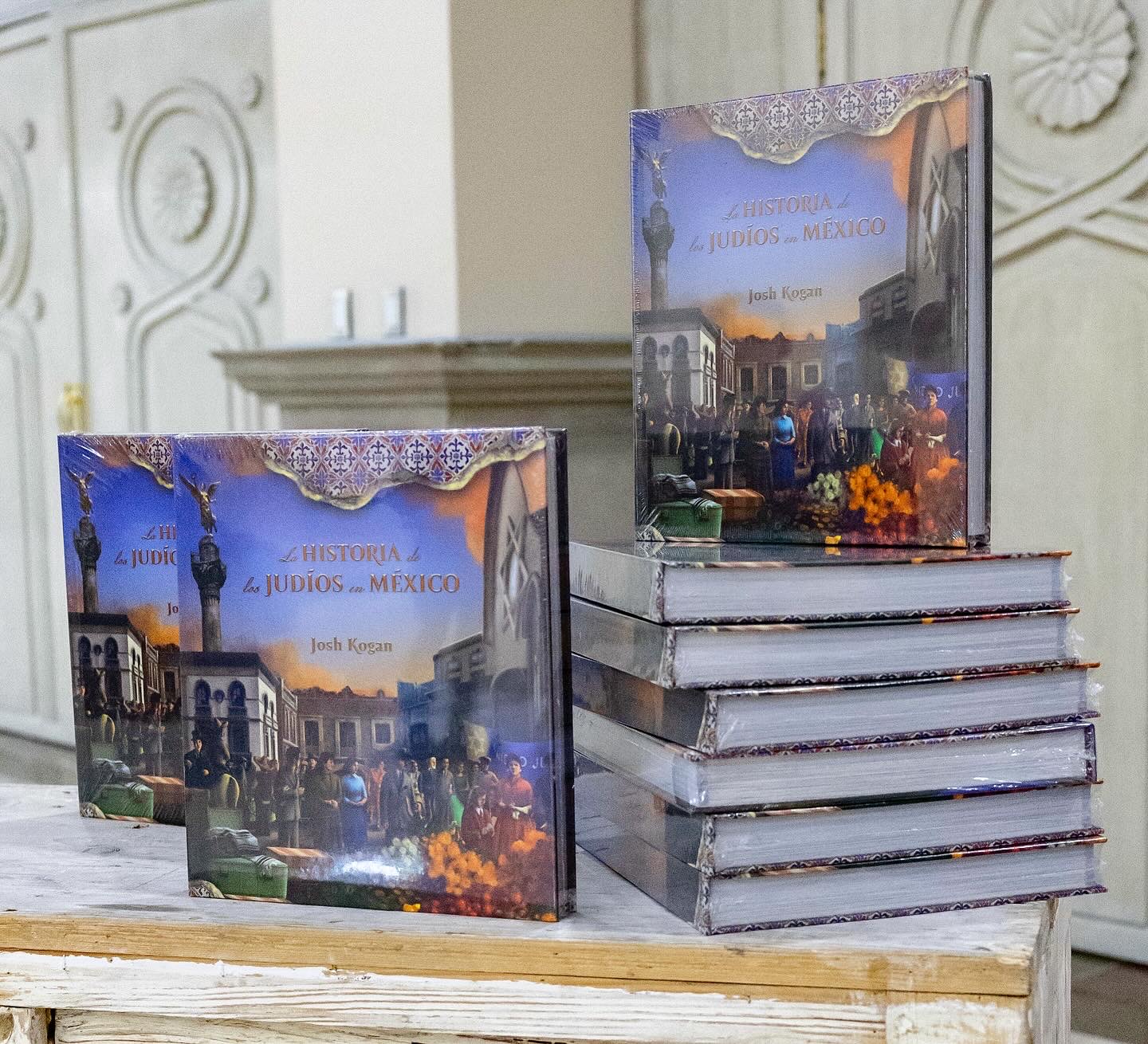
Kogan’s work is titled “La historia de los judÃos en Méxicoâ€� (“The Story of the Jews in Mexicoâ€�), a 400-page coffee-table book published in 2025 by Fundación Metta Saade, A.C. and the Comité Central de la Comunidad JudÃa de México, A.C. (Central Committee of the Jewish Community in Mexico).

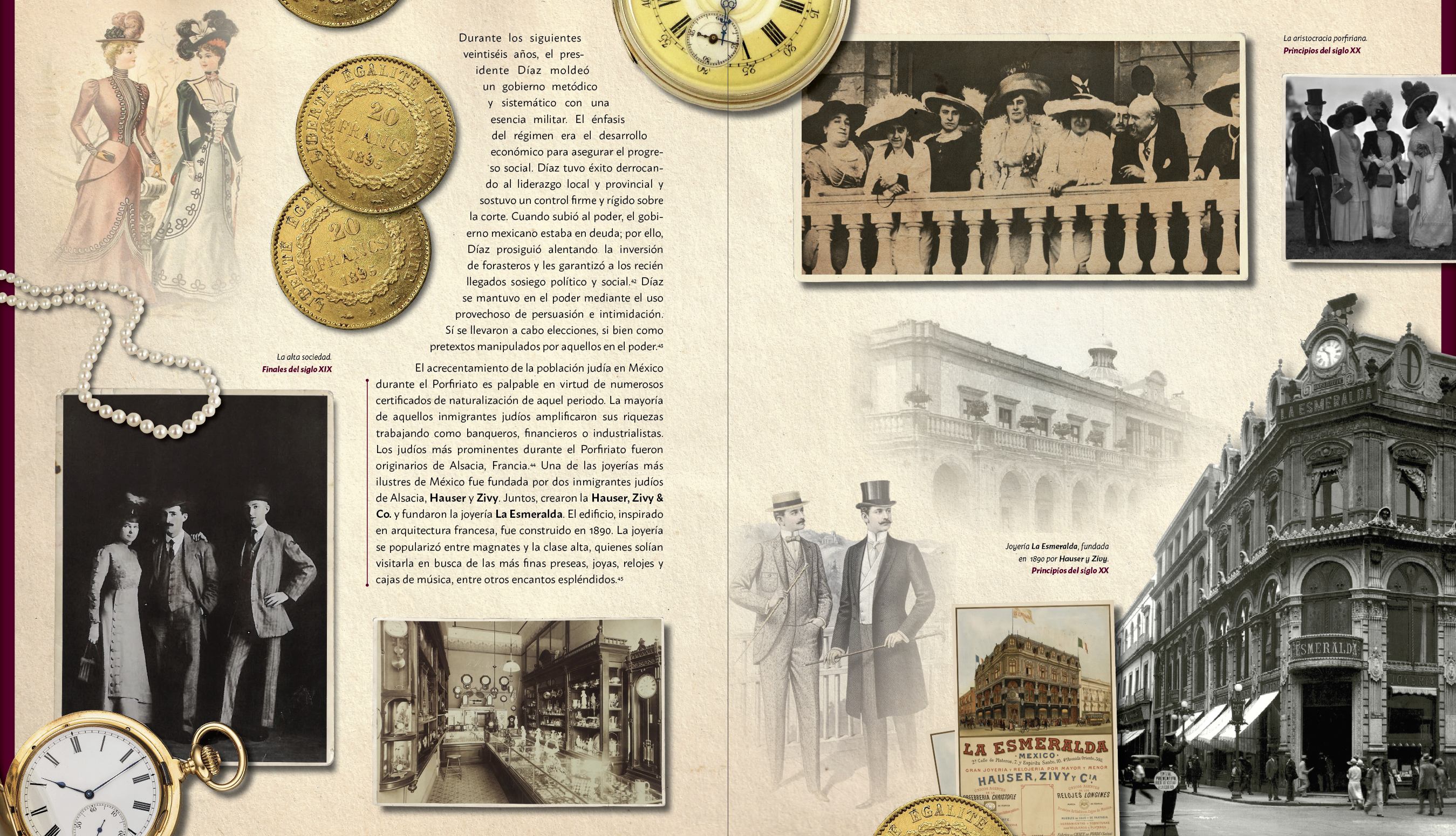
The book traces Jewish presence in Mexico from the colonial period in the 1500s through the development of modern Jewish communities, bringing together historical records, archives and hundreds of photographs and documents. It is the first single-volume work to showcase the histories of all the Jewish communities in Mexico.
“There are different Jewish communities in Mexico—they all work together, but they’re separate communities,� Kogan said. “There is not a single book that unites all the Jews of Mexico. That was my idea—one book for everyone.�
A Community Story Rooted in Personal Experience
While growing up in Mexico City, Kogan was a part of one of the strongest and largest Jewish communities in Latin America. When his family later moved to Akron, Ohio, he experienced Jewish life in a very different context. For the first time in his life, Kogan encountered people who had never met a Jewish person before.
“That was hard, but also very interesting—having to explain who I am,� Kogan said, “Living in such a small Jewish community—that I really appreciate and love—made me also appreciate where I was coming from.�
This personal connection informed both the emotional and scholarly heart of his work.
The Beginning of a Research Journey at Ñý¼§Ö±²¥ State
The project began at Ñý¼§Ö±²¥ State, where Kogan majored in Integrative Studies with minors in and history. He was encouraged by Chaya Kessler, then Director of the Jewish Studies Program.
“She told me, ‘You should join the Honors College—you should write a senior honors thesis,’� Kogan said. “And I did.�
Kogan’s thesis advisor, David Odell-Scott, Ph.D., associate dean and professor in the College of Arts & Sciences, worked closely with him every week.
“He would offer me his professional advice and expertise. He’s brilliant—he’s able to see what most people can’t,� Kogan said. “It meant the world to me and helped me so much.�
During his time at Ñý¼§Ö±²¥ State, Kogan immersed himself in Jewish Studies, history, languages and art. He studied Yiddish at the renowned at the . He traveled to Poland through Ñý¼§Ö±²¥ State’s Jewish Studies Program, an experience he described as “life changing.â€� He also participated annually in group study trips to the in Washington, D.C.
“My four years at Ñý¼§Ö±²¥ State were the best of my life,â€� Kogan said. “I had so many incredible professors and classes.â€�
Deep Archival Research
Much of the research for the book took place at the Centro de Documentación e Investigación JudÃo de México, the Jewish Research and Documentation Center in Mexico City. The archive stores everything from early Jewish immigration papers to photographs and newspaper collections.
“I spent hours and hours every single day scanning every picture and passport and document that I used on the actual book when I designed it after Ñý¼§Ö±²¥ State,â€� Kogan said.
He also conducted interviews and gathered materials from private collectors and families connected to the community.
Designing a Visual History
Kogan took several graphic design classes at Ñý¼§Ö±²¥ State, and he envisioned his final work not only as a scholarly text but as a visual experience. This led to it becoming a coffee-table book with pictures spanning the beginning to end.
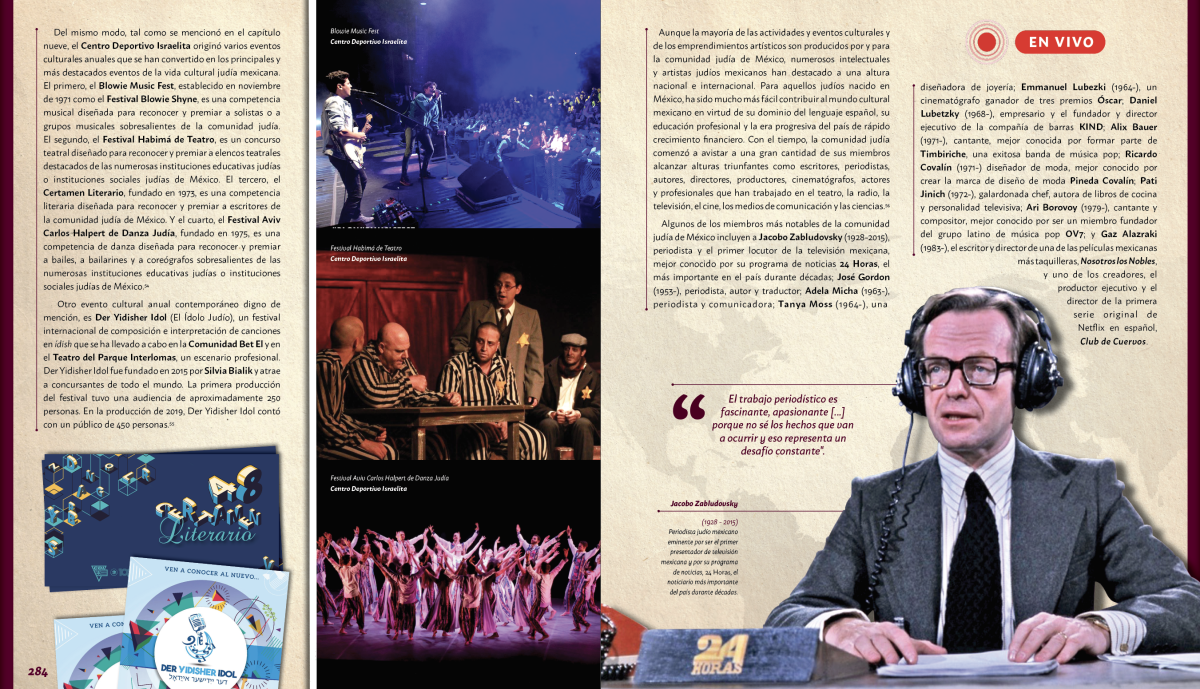
After graduation, he moved to Los Angeles and later New York, continuing to write, design and revise the manuscript. The final layout was completed by Kogan in Adobe InDesign, with every page composed to pair text and archival images in narrative sequence.
A Historic Publication and Community Celebration
The publication became possible when a single donor stepped forward to sponsor the entire printing cost, allowing the book to be printed as a high-quality art volume and distributed across Jewish institutions in Mexico.
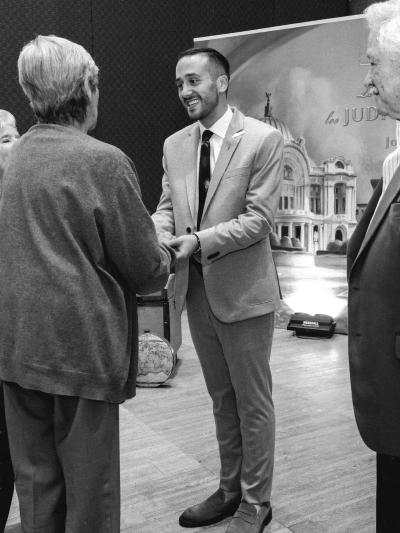
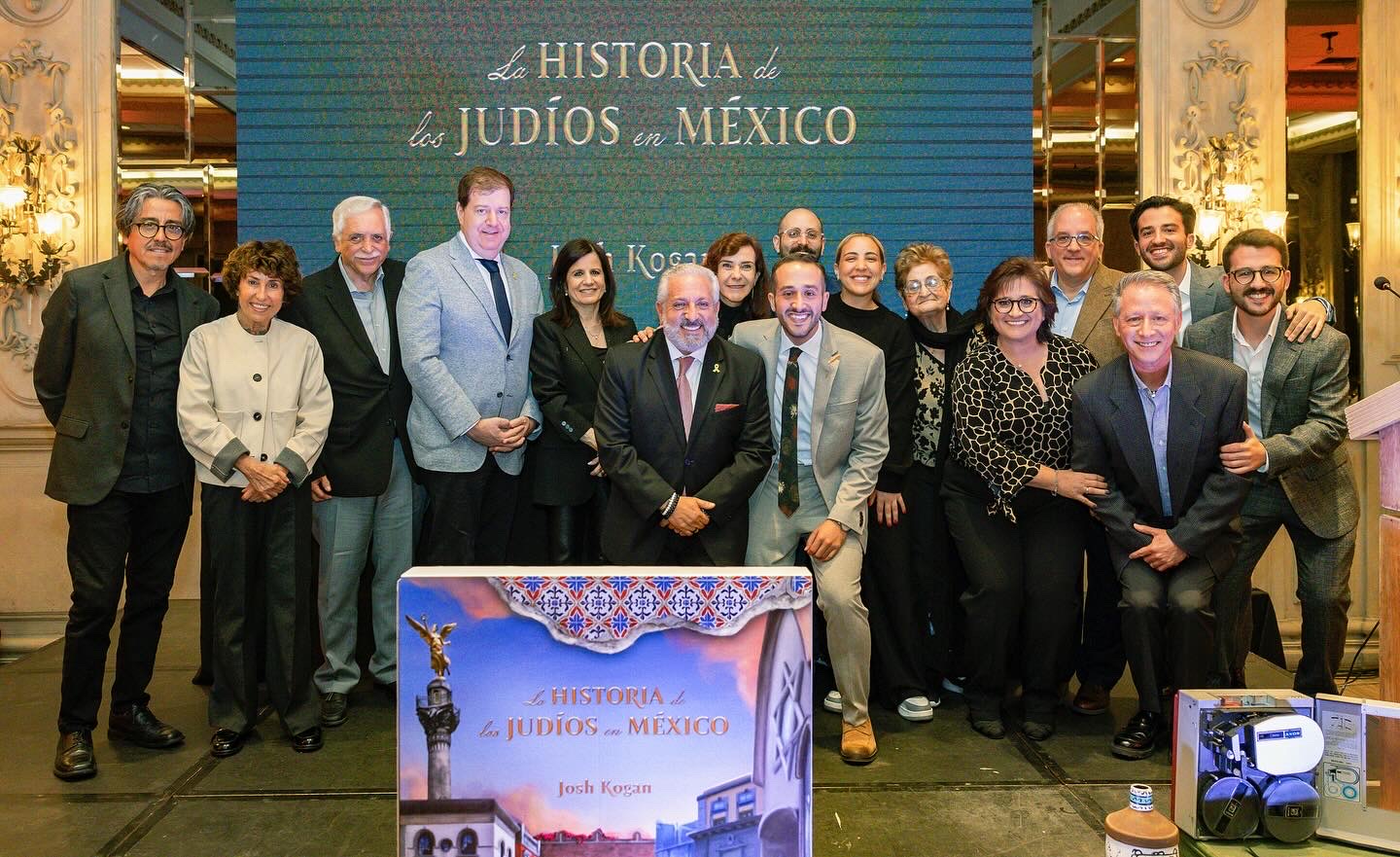
In May 2025, the book launched in Mexico City at a ceremony attended by over 250 people, including community leadership and families whose archival materials contributed to the project.
“I couldn’t believe it was happening—seeing my book in real life and not in my head, touching and holding it,� Kogan said. “There were cameras everywhere and people asking me to sign it—it was so exciting.�
An English Edition to Come
Kogan has already completed the English manuscript and is currently working with an editor to finalize language and layout. Because English text compresses more tightly than Spanish, the English edition requires reworking the visual design, a process that may take several more months.
He hopes to publish the English edition as early as Summer 2026.
Kogan’s Next Steps
Kogan is currently a fourth-year rabbinical student in New York and expects to graduate in two years. He hopes to continue writing and is already at work on his second book, currently in its early chapters. He is considering serving as a rabbi in a synagogue after ordination.
Advice for Students
When asked to offer advice for current Ñý¼§Ö±²¥ State students, Kogan shared the message that guided him through eight years of research, translation, revision and publication:
“If you will it, it is no dream,� he said, quoting Theodor Herzl. “If you really want to do something, don’t stop. Go ahead and do it. Anything is possible.�
###